What Photographic Movement Tried to Elevate Photography and Photographer to Art and Artist?
An influential and prolific lensman, Alfred Stieglitz produced thousands of pictures throughout his career, covering numerous themes that captured different periods of a rapid transition in American society. In addition to his photography work, he was a vital force in the development of modern photography and modern art in general in America, working as an fine art dealer, exhibition organizer, publisher and editor. He published the journalPhotographic camera Piece of work, formed the exhibition society the Photo-Secession and ran a series of influential galleries, most notably the Little Galleries of the Photo-Secession, meliorate known as the 291 Gallery.
This influential gallery, which operated at 291 Fifth Avenue in New York from 1905 to 1917, helped bring fine art photography to the same stature as painting and sculpture, but also introduced some of the well-nigh avant-garde European artists of the time to America and fostered the country'southward ain modernist figures.
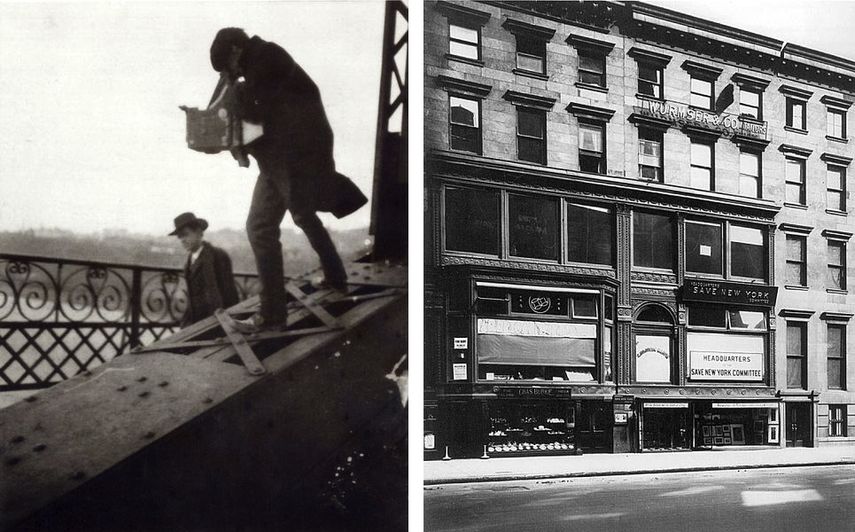
The 291 Gallery
At an early meeting of the Photographic Order of London established in 1853, one of the members described photography equally "too literal to compete with works of art" because it was unable to "elevate the imagination". Fast forward to the early years of the 20th century, when the medium's place in the world of fine art was still very indefinite. Photographers were non considered "real" artists and even major photographic exhibitions were judged by painters and sculptors.
Insistent that photography warranted a place among the fine arts, Alfred Stieglitz was in search of the best forum to present it to the public. He foundedthe Photo-Secessionist movement that sought to promote photography every bit fine art in general and photographic Pictorialism in detail and launchedCamera Work magazine every bit its vocalism. Urged by his friend Edward Steichen, he signed a one-year lease for three small rooms across Steichen's apartment to create an exhibition space called the Little Galleries of the Photo-Secession, ordinarily known as 291 Gallery after its address at Fifth Avenue, New York. They wanted to use the space the most finer, non only equally a gallery but also as an educational facility for artists and photographers and as a meeting place for fine art lovers.
The New York gallery was formally opened on November 24th, 1905 with an exhibition of one hundred prints past Photo-Secession members, all selected past Stieglitz. Over the next few weeks, information technology attracted hundreds of New Yorkers.
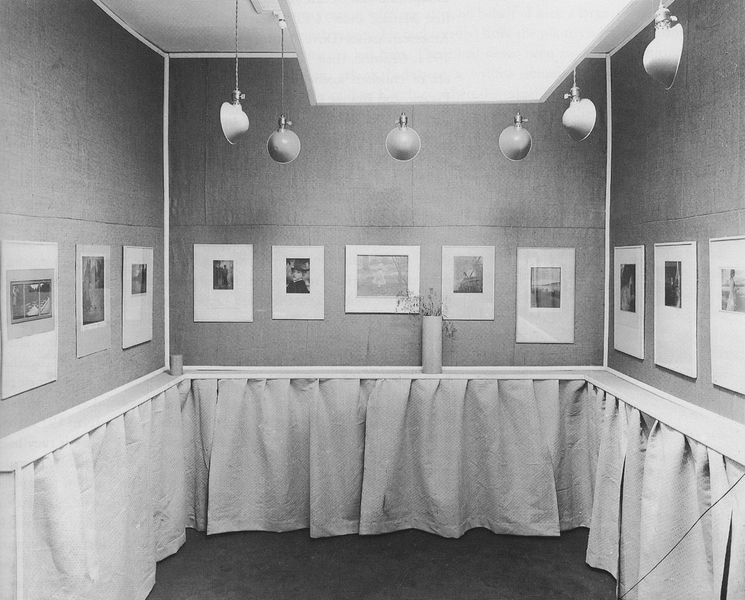
The Influence on Photography and Modern Fine art
Throughout the first yr, the 291 Gallery hosted a range of photographic exhibitions. These included the exhibition of French photographers, including Robert Demachy, Constant Puyo and René Le Bégue, a two-person testify of the works of Gertrude Käsebier and Clarence H. White, a testify of works by British photographers, early on prints by Steichen, a evidence devoted to German and Austrian photographers, and another display of prints by members of the Photo-Secession. The gallery soon became a destination for intellectuals and artists, who engaged in freewheeling discussions in add-on to viewing the art on brandish.
After this successful year, the fellow photographer Joseph Keiley wrote:
Today in America the real boxing for the recognition of pictorial photography is over. The chief purpose for which the Photo-Secession was established has been achieved – the serious recognition of photography every bit an additional medium of pictorial expression.
In 1907, Stieglitz decided to milk shake things upward past mounting the first non-photography testify at the 5th Artery gallery. Although it was a major success, the gallery continued with photographic exhibitions for the residual of the yr, including those by such photographers as Adolf de Meyer, Alvin Langdon Coburn and members of the Photo-Secession. In 1908, the gallery hosted its 2nd not-photographic showDrawings by Auguste Rodin, which first introduced the artist's works on paper to the United states.
Due to the increment in rent, the gallery soon had to shut its original location, but opened adjacent door with the financial help of Stieglitz'southward associate, Paul Haviland. Stieglitz and Haviland decided to officially adopt the proper name 291 instead of the Little Galleries of the Photograph-Secession, wanting the new space to be nearly more than photography.
Originally an outlet for exhibiting work by Photo-Secessionist photographers, the gallery shortly became a preeminent heart for the exhibition of modern European and American artists. It became the first venue in America to show Auguste Rodin, Henri Matisse, Paul Cézanne, and Pablo Picasso. Information technology besides showed works past artists such as Constantin Brancusi, Francis Picabia, John Marin, Max Weber, Arthur Pigeon, Marsden Hartley, Marius de Zayas and Georgia O'Keeffe, who later became Stieglitz'south wife.
Virtually no other galleries in the United States were showing works with such abstract and dynamic content at the time, introducing the public to the individuals who are now regarded to have been at the forefront of modern art. From 1909 until it closed in 1917, The 291 Gallery featured only six shows of photography out of a total of 61 exhibitions held.
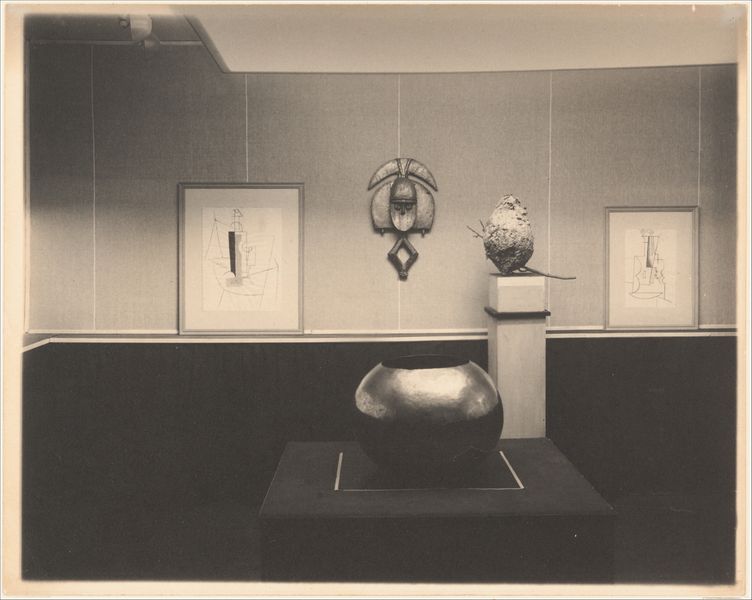
The Legacy of 291 Gallery
Defeated by financial woes caused by the war, and his own uncertainty about his role in promoting modern fine art, caused by the emergence of the Arsenal Evidence, Stieglitz closed the gallery in June 1917, only two months afterwards the United States alleged war on Federal republic of germany. Over the next viii years, he focused on his own photography and organized exhibitions of art and photography at other venues.
When Stieglitz first started introducing works of modern art, the thought was to test photography confronting the "most alive work" being done in other media. He hoped that through exhibiting modern art likewise as photography the value of each as a ways of art could exist realized. In a 1907 publication ofCamera Work, Stieglitz wrote that his not-photographic exhibitions sought to bring nearly the understanding of "what photography actually means":
Men like Matisse and Picasso and a few others are giants. Their vision is anti photographic… Information technology is this anti photography in their mental mental attitude and in their work that I am using in order to emphasize [sic] the meaning of photography.
Before Stieglitz's efforts, photographs were purely understood every bit historical records. Through his ain photographic works, he helped definethe greater Pictorialist project and set a firm aesthetic instance for his contemporaries. The influence ofPhotographic camera Piece of work mag and 291 gallery was immense, providing legitimacy of photography in the United States and assuasive photographers like Ansel Adams and Edward Weston to become household names.


The hauntingly cute works of the Pictorialist movement are among the nigh spectacular photographs ever created. Beginning in the late nineteenth century, Pictorialist artists sought to elevate photography— until and then seen largely as a scientific tool for documentation—to an art class equal to painting. Adopting a soft-focus approach and utilizing dramatic effects of light, richly coloured tones and bold technical experimentation, they opened up a new earth of vision expression in photography. More than than a hundred years later, their aesthetic remains highly influential.
Featured image: Frank Eugene - Eugene, Stieglitz, Kühn and Steichen Admiring the Work of Eugene, 1907, platinum print, Yale Collection of American Literature. Captions, via Creative Commons.
clevelandstine1951.blogspot.com
Source: https://www.widewalls.ch/magazine/alfred-stieglitz-291-gallery
0 Response to "What Photographic Movement Tried to Elevate Photography and Photographer to Art and Artist?"
Post a Comment